

Quick answer
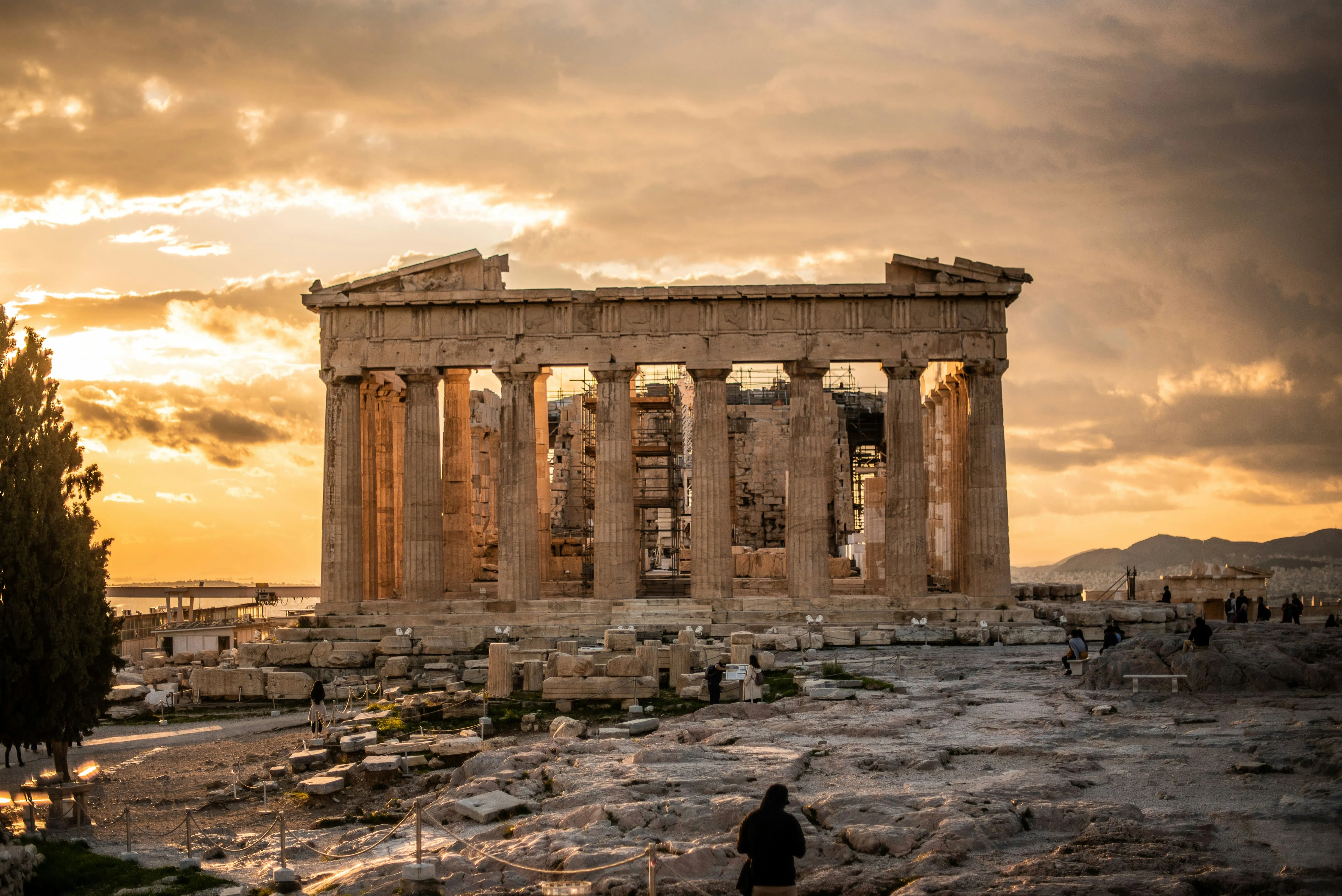
What is the Parthenon in Athens? The Parthenon is a Doric temple built between 447 and 432 BCE on the Acropolis to honor Athena Parthenos, the patron goddess of Athens. It served as both a religious treasury and a symbol of Athenian power after the Persian Wars. The structure stands at the archaeological site open daily from 08:00 to 20:00, with a 30 EUR entrance fee.
The Parthenon was constructed with 46 outer columns and an inner chamber that once housed a colossal gold-and-ivory statue of Athena, nearly 12 meters tall. The temple was not a congregational space—rituals took place at outdoor altars—but a treasury and votive house where the city stored offerings and wealth under the goddess's protection. Architects Iktinos and Kallikrates designed the structure with subtle curvature: the stylobate curves upward at its center, and columns lean inward by millimeters, correcting for optical distortion at monumental scale. These refinements, invisible to the casual glance, required quarrying and carving each block to unique specifications. Pentelic marble, sourced from Mount Pentelikon 16 kilometers northeast, was transported by ox-cart and assembled without mortar. The name Parthenon derives from parthenos, meaning virgin, referencing Athena's epithet. The temple replaced an earlier structure destroyed during the 480 BCE Persian sack of Athens. Pericles commissioned the new building as part of a broader program to rebuild the Acropolis and assert Athens' political and cultural dominance in the Greek world. The Parthenon became a Christian church in the 6th century CE, then an Ottoman mosque in the 1460s. A Venetian bombardment in 1687 ignited gunpowder stored inside, destroying the roof and much of the interior structure. Today the Parthenon stands as a ruined temple, with scaffolding and restoration work ongoing since 1975. The pediment sculptures and much of the frieze were removed by Lord Elgin in the early 19th century and now reside in the British Museum, a point of diplomatic contention. What remains on site are the columns, the platform, and fragments of the decorative program—enough to convey the scale and precision of the original design. Visitors approaching from the Propylaea see the western façade first, framed against the sky, exactly as ancient processional routes intended.
“The stylobate curves upward at its center, and columns lean inward by millimeters, correcting for optical distortion at monumental scale.”
Historical Significance: What Is the Parthenon in Athens?
The Parthenon stands as the defining monument of Classical Greek architecture, commissioned in 447 BC by Pericles during Athens' golden age. Constructed over nine years under architects Ictinus and Callicrates, with sculptor Phidias overseeing its decorative program, the temple honored Athena Parthenos—Athena the Virgin—protector of the city-state. What is the Parthenon in Athens if not the physical embodiment of Athenian imperial confidence, funded by tribute from the Delian League and built from Pentelic marble quarried sixteen kilometers northeast of the Acropolis. The naos once housed Phidias's twelve-meter chryselephantine statue of Athena, gold plates over an ivory core, flanked by a two-story colonnade. The structure survived antiquity as a functioning temple until the fourth century AD, when Theodosius I's edicts closed pagan sanctuaries across the Byzantine Empire. By the sixth century, the Parthenon had been consecrated as a Christian church dedicated to the Parthenos Maria, its eastern orientation reversed, an apse carved into the eastern cella, and the colossal Athena removed. Ottoman forces captured Athens in 1458 and converted the building into a mosque, adding a minaret at the southwest corner. The catastrophic transformation occurred in 1687 during the Morean War, when Venetian artillery commander Francesco Morosini ordered the bombardment of the Acropolis. A powder magazine the Ottomans had stored inside the Parthenon detonated, obliterating the roof, collapsing the central colonnade, and destroying much of the frieze and metopes. Lord Elgin's removal of surviving sculptures between 1801 and 1812 stripped the pediments and frieze panels now held in the British Museum, a removal authorized by Ottoman firman but contested ever since. Greek independence in 1832 brought the first systematic clearance of post-Classical additions, a process that exposed the Doric colonnade but erased Byzantine and Ottoman layers. The most recent restoration, begun in 1975 by the Acropolis Restoration Service, continues today, reversing prior cement repairs and using titanium dowels to reassemble displaced drums and architrave blocks. Visitors walking the Acropolis encounter the temple's north and south colonnades substantially intact, the western cella wall standing to frieze height, and anastylosis—the reassembly of original fragments—visibly underway along the eastern façade.
Pericles commissions the Parthenon; construction begins under architects Ictinus and Callicrates with Phidias directing sculptural decoration.
The temple is dedicated to Athena Parthenos, housing Phidias's twelve-meter gold-and-ivory cult statue in the naos.
The Parthenon is converted into a Christian church dedicated to the Parthenos Maria, with an apse added to the eastern cella.
Ottoman forces capture Athens and transform the Parthenon into a mosque, erecting a minaret at the southwest corner.
Venetian artillery ignites an Ottoman gunpowder magazine inside the Parthenon, destroying the roof and central colonnade during the Morean War.
Lord Elgin removes surviving pediment sculptures and frieze panels under Ottoman authorization, now displayed in the British Museum.
The Acropolis Restoration Service launches ongoing anastylosis using titanium reinforcements to reassemble original marble fragments and reverse prior cement repairs.
Opening Hours for What Is the Parthenon in Athens
The Acropolis archaeological site is open daily throughout the week, including weekends and public holidays. Visitors may access the site during the following operational hours.
| Monday | 08:00–20:00 | |
|---|---|---|
| Tuesday | 08:00–20:00 | |
| Wednesday | 08:00–20:00 | |
| Thursday | 08:00–20:00 | |
| Friday | 08:00–20:00 | |
| Saturday | 08:00–20:00 | |
| Sunday | 08:00–20:00 |
Best Time to Visit: What Is the Parthenon in Athens Crowd Strategy?
The optimal time to visit the Parthenon is during the early arrival window of 08:00–09:30 to bypass the heat and the influx of large tour groups. Prioritizing these morning hours ensures a more manageable pace before the site reaches peak occupancy.
Spring and Autumn
Moderate to highMild temperatures 15-25°C
These shoulder seasons offer the most comfortable climate for navigating the site.
Summer
Very highHot temperatures often exceeding 35°C
Mid-summer requires strict adherence to early morning arrival to avoid midday heat.
Winter
LowCool temperatures 5-15°C
Crowds are significantly thinner, though visitors should prepare for potential rain.
Weekday mornings
Lowest—
Arriving at 08:00 provides the highest probability of avoiding large cruise ship excursions.
Verdict: The best strategy is to arrive at the gates at 08:00 on a weekday during April or October.
Site Features: What Is the Parthenon in Athens Context?
The Parthenon sits as the centerpiece of the Acropolis, surrounded by several other significant structures that define the classical Athenian landscape. Exploring the plateau allows visitors to observe these architectural monuments in their original spatial relationship.
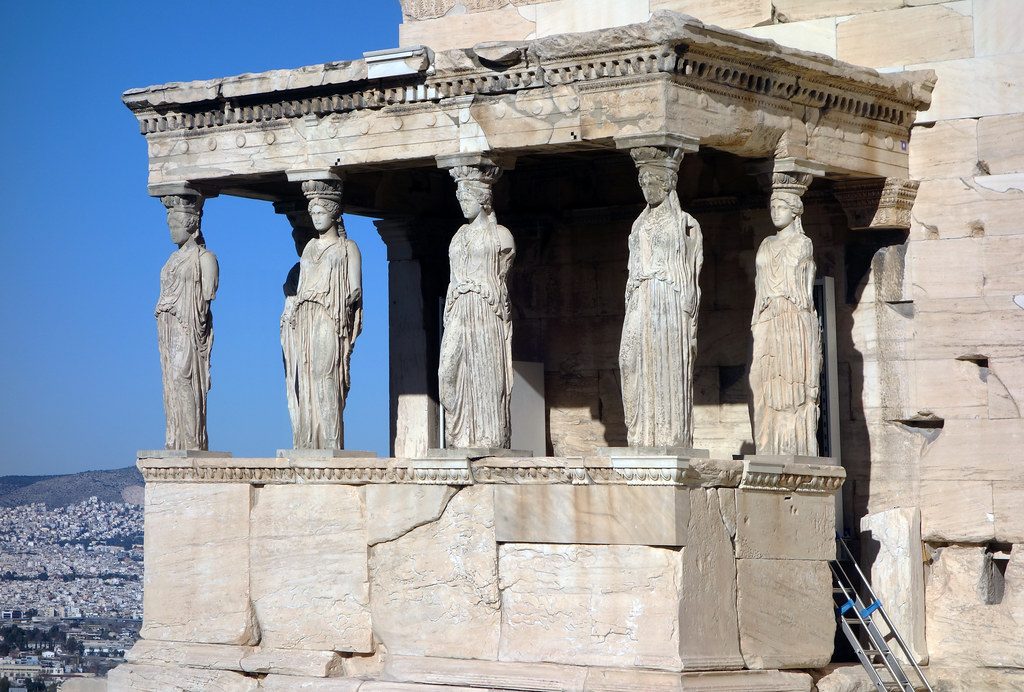
Erechtheion
An ancient temple on the north side known for the Porch of the Caryatids, featuring six draped female figures as columns.
View the Caryatids from the side to appreciate the intricate carving.
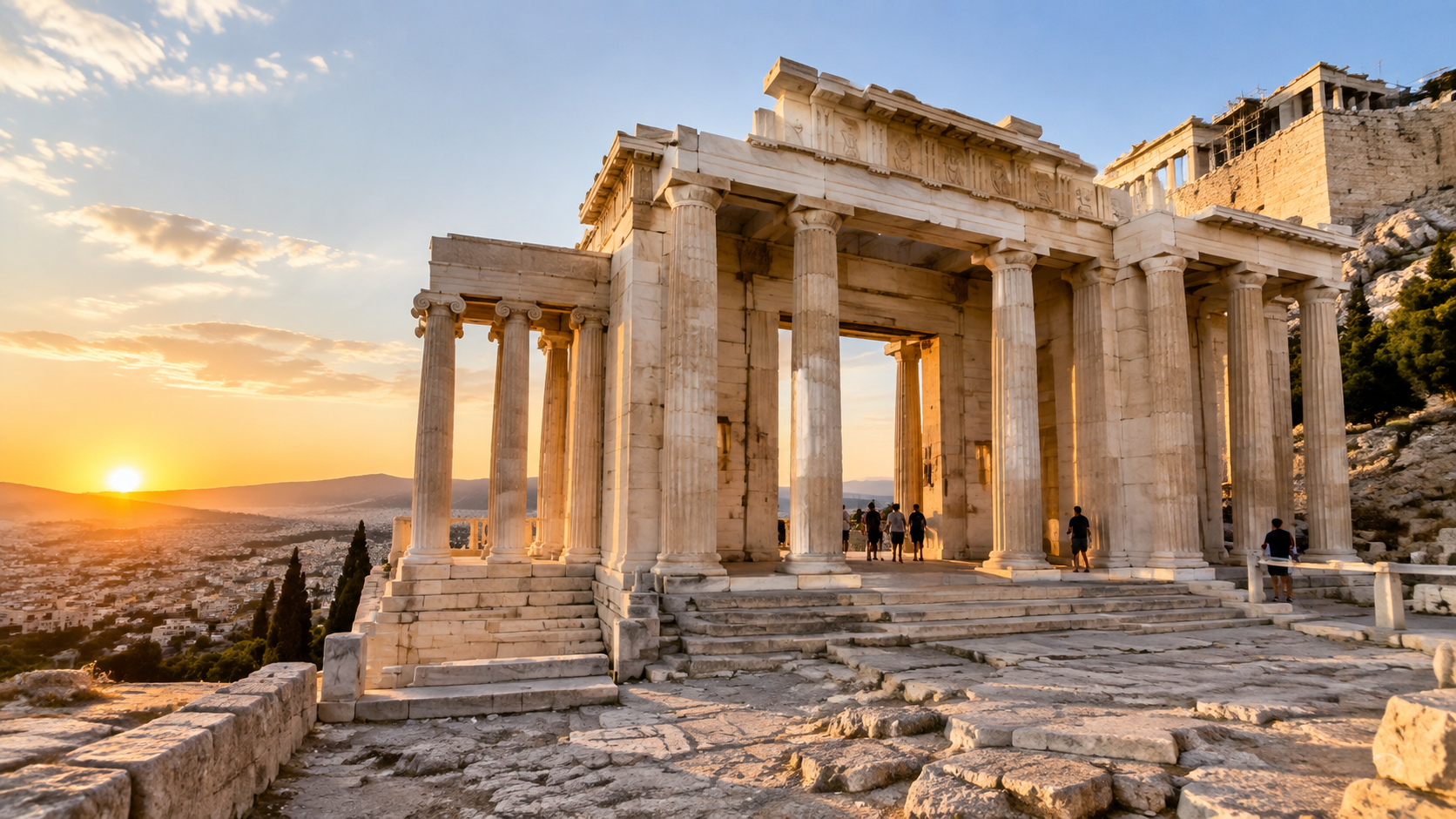
Propylaea
The monumental gateway serving as the entrance to the Acropolis, designed with Doric and Ionic elements.
Look up at the coffered ceilings while walking through the central passage.
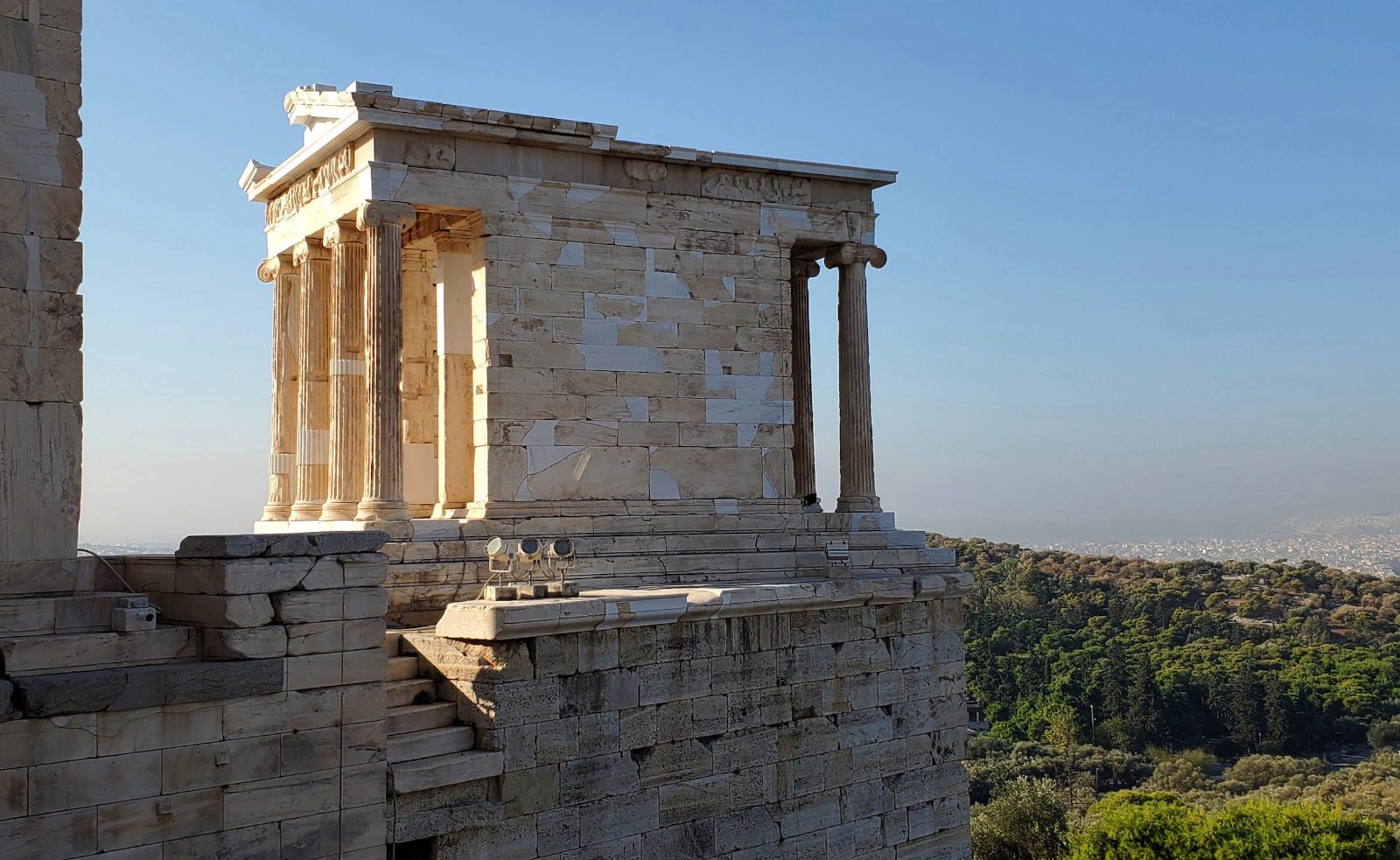
Temple of Athena Nike
A small, elegant Ionic temple positioned on a bastion near the entrance, dedicated to the goddess of victory.
Walk to the edge of the bastion for a clear vantage point.
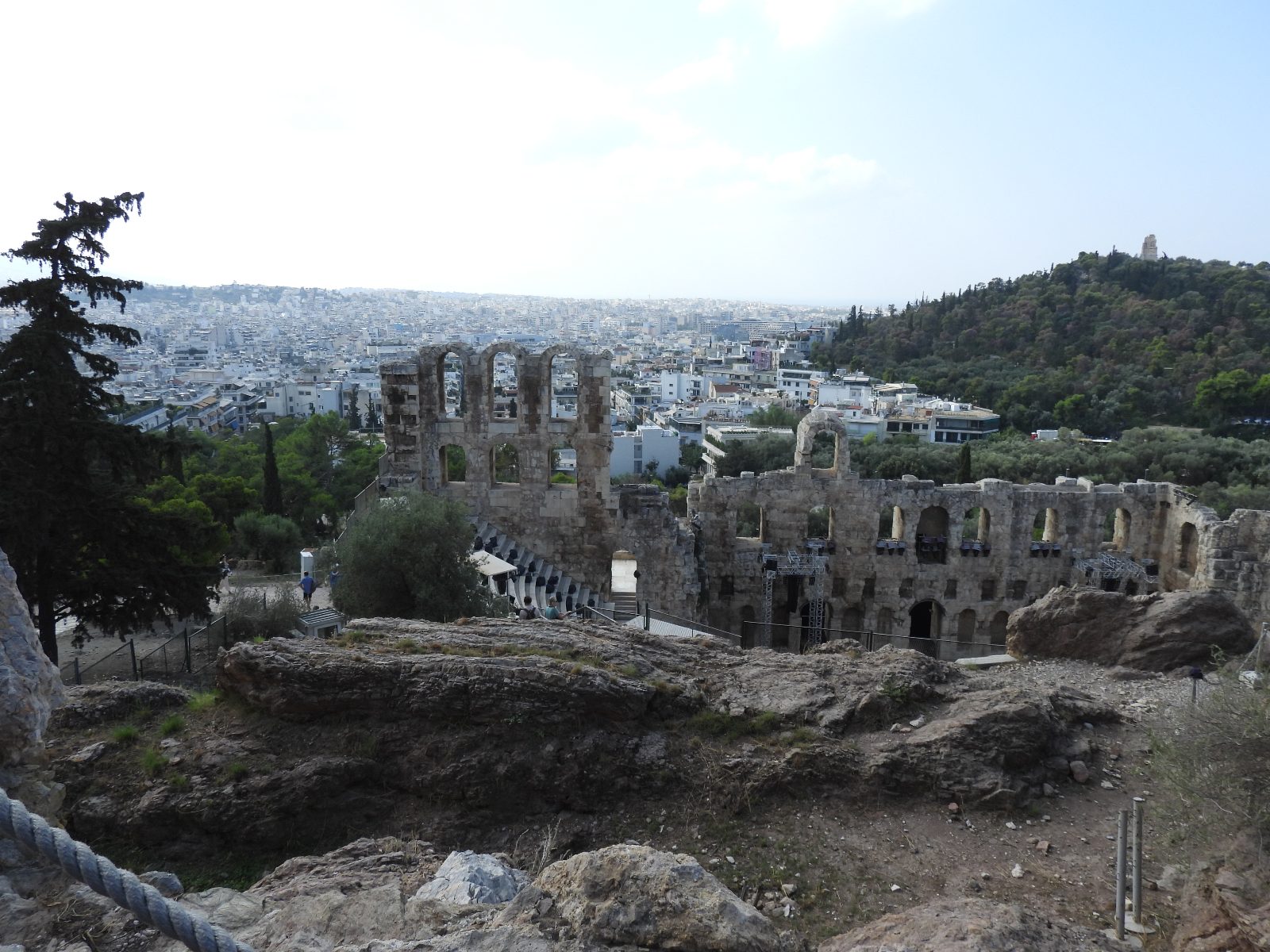
Theatre of Dionysus
Located on the southern slope of the Acropolis, this is considered the world's first theatre.
Observe the remaining stone seats from the upper perimeter path.
Check availability
Common Questions About the Parthenon in Athens
Everything you need to know about what is the parthenon in athens