2 hr
Acropolis, Parthenon & Museum Guided Experience
- Expert local guide
- Small group
- Skip-the-line access
- Free cancellation
Athens Acropolis & Parthenon — Guided Tours with Museum Entry
Walk the sacred rock where democracy was born, stand beneath Doric columns that have weathered 2,500 winters
Compare fares, pick the fit — all bookings are mobile-voucher and eligible for free cancellation where shown.
2 hr
2 hr
2 hr
| Experience | Duration | Rating | Skip-the-line | Guide | Small group | Free cancel. | Price | |
|---|---|---|---|---|---|---|---|---|
|
Guided Experience
Most popular
Acropolis, Parthenon & Museum Guided Experience
|
2 hr | ★ 4.8 | ✓ | ✓ | ✓ | ✓ | €29 | Book → |
|
Guided Experience
Acropolis & Parthenon Guided Tour with Museum Option
|
2 hr | ★ 4.7 | ✓ | ✓ | ✓ | ✓ | €24 | Book → |
|
Guided Experience
Early Access Acropolis & Parthenon Guided Tour
|
2 hr | ★ 4.8 | ✓ | ✓ | ✓ | ✓ | €24 | Book → |
Worth it for narrative context seekers
An athens acropolis & parthenon guided tour with museum costs between €45–€85 depending on the option—roughly 1.5× to 3× the €30 independent entrance fee. That premium buys expert narration across one of the world's most layered archaeological sites, where marble fragments, column drums, and temple foundations demand context most visitors lack. Guided Acropolis experiences with museum access unpack the Parthenon's role in Athenian democracy, the Erechtheion's dual deity worship, and the sculptural narrative of the pediments now housed in the Acropolis Museum. Without a guide, you're left decoding 2,500-year-old ruins through signage alone—doable, but shallow. The tours deliver depth: why the Propylaea was a propaganda gateway, how the Panathenaic procession shaped the frieze, and which museum galleries hold original caryatids versus site replicas. Worth it if you want the site to resonate beyond photo stops; skippable if you've studied classical Greece extensively or prefer solo exploration at your own pace.
Bottom line: Guided athens acropolis & parthenon guided tour with museum tickets transform ruins into stories—pay the premium if narrative matters more than wandering time.
They complement each other, but most visitors who prioritize historical depth and crowd management call the athens acropolis & parthenon guided tour with museum the more rewarding choice.
|
Top pick Guided Tour |
Independent Visit | |
|---|---|---|
| Access | Skip-the-line entrance included | Standard timed-entry booking |
| Expertise | Licensed archaeologist guide | Self-guided app or signage |
| Content | Deep narrative & myths | Physical ruins only |
| Intensity | Efficient and structured | Self-paced and flexible |
| Duration | 3–4 hours (approx) | 1.5–3 hours |
| Price | From €67 (varies) | 30 EUR (full adult) |
| Best Arrival | 08:00–10:00 | 08:00–10:00 |
| See tickets & prices |
Verdict: If you want to decode the ruins and navigate the site with ease, the athens acropolis & parthenon guided tour with museum provides a superior experience, while independent travel suits those who prefer complete control over their own schedule.
Hand-picked experiences loved by thousands of travelers
2 hours
Free Cancellation
Explore Athens' ancient citadel with an expert archaeologist guide and unlock millennia of Greek history
2 hours
Free Cancellation
Walk through 3,000 years of history at Athens' most iconic site with an expert guide and reserved access.
2 hours
Free Cancellation
Explore Athens' ancient citadel with a qualified guide, starting early from the southern slope
1 hour 30 minutes
Free Cancellation
Explore Athens' ancient citadel with expert guidance, pre-booked tickets, and museum access in a small group
2 hours
Free Cancellation
Intimate 8-person guided exploration of Athens' most iconic ancient monuments with skip-the-line access
1 hour 30 minutes to 3 hours
Free Cancellation
Explore Athens' ancient citadel and world-class museum with a licensed guide who brings 3,000 years of history alive
4 hours
Free Cancellation
Climb Athens' sacred hill and walk the ruins where democracy was born—all tickets included
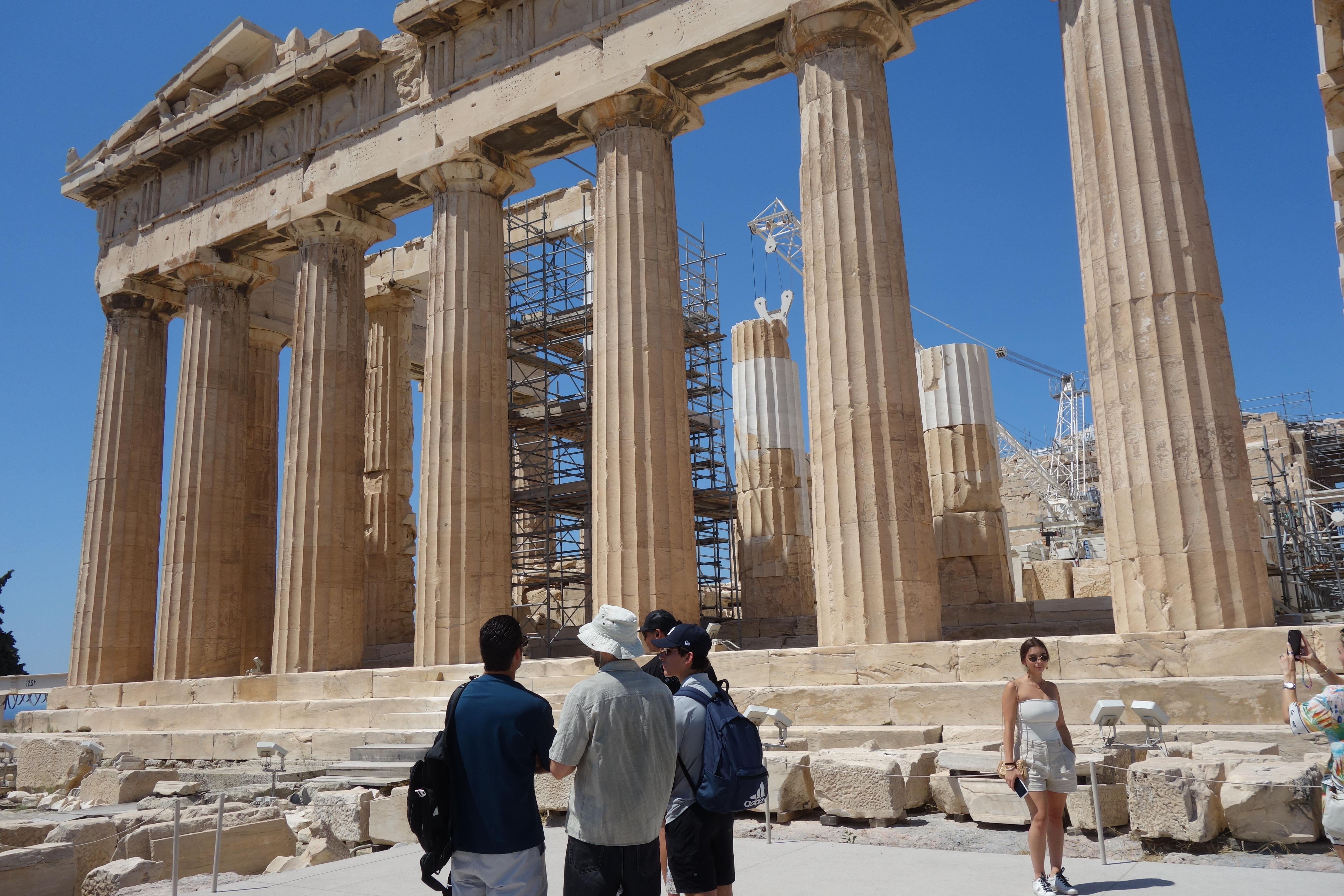
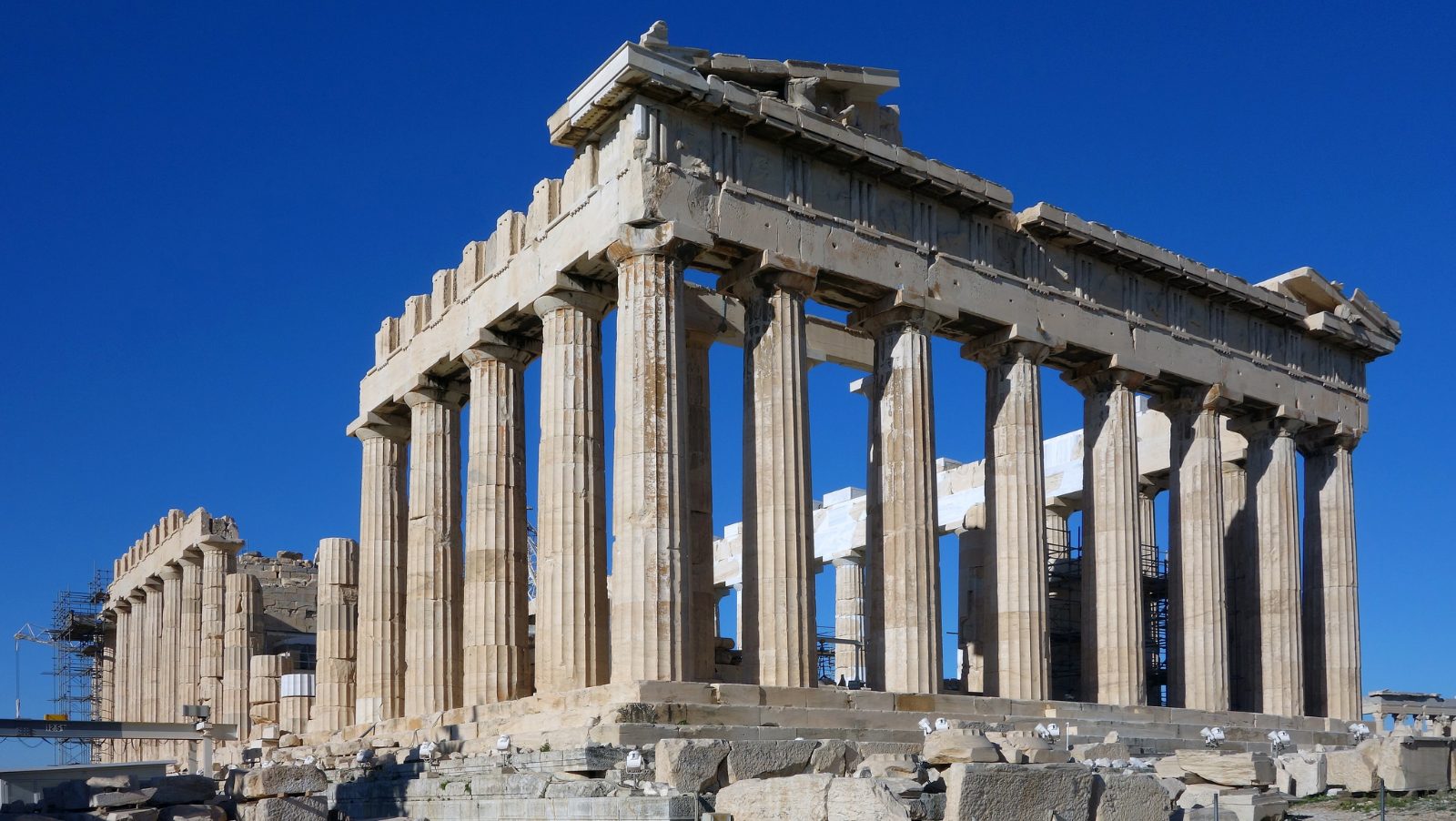
The centerpiece of the site, dedicated to Athena and built between 447–432 BCE, features intricate optical corrections in its design.
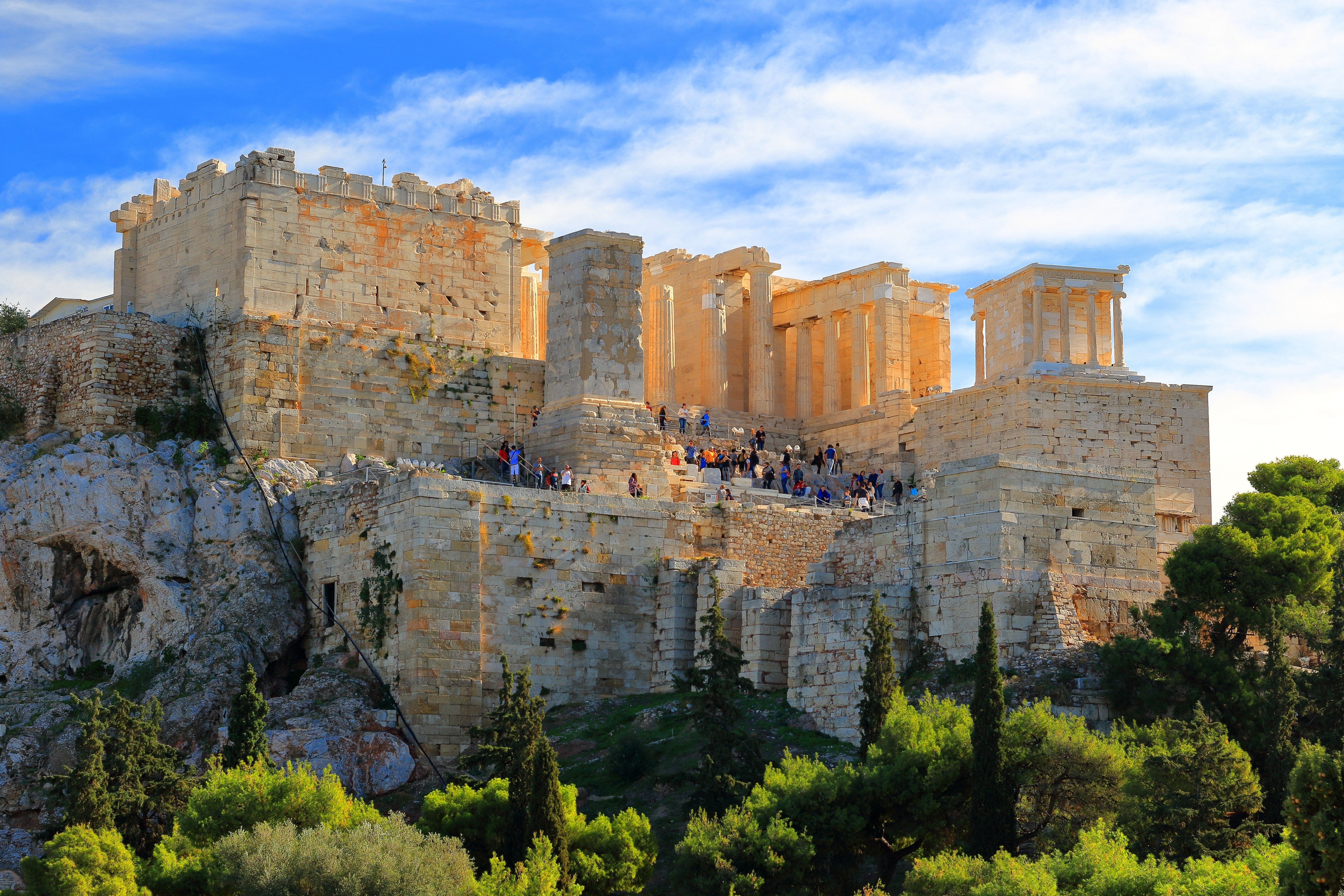
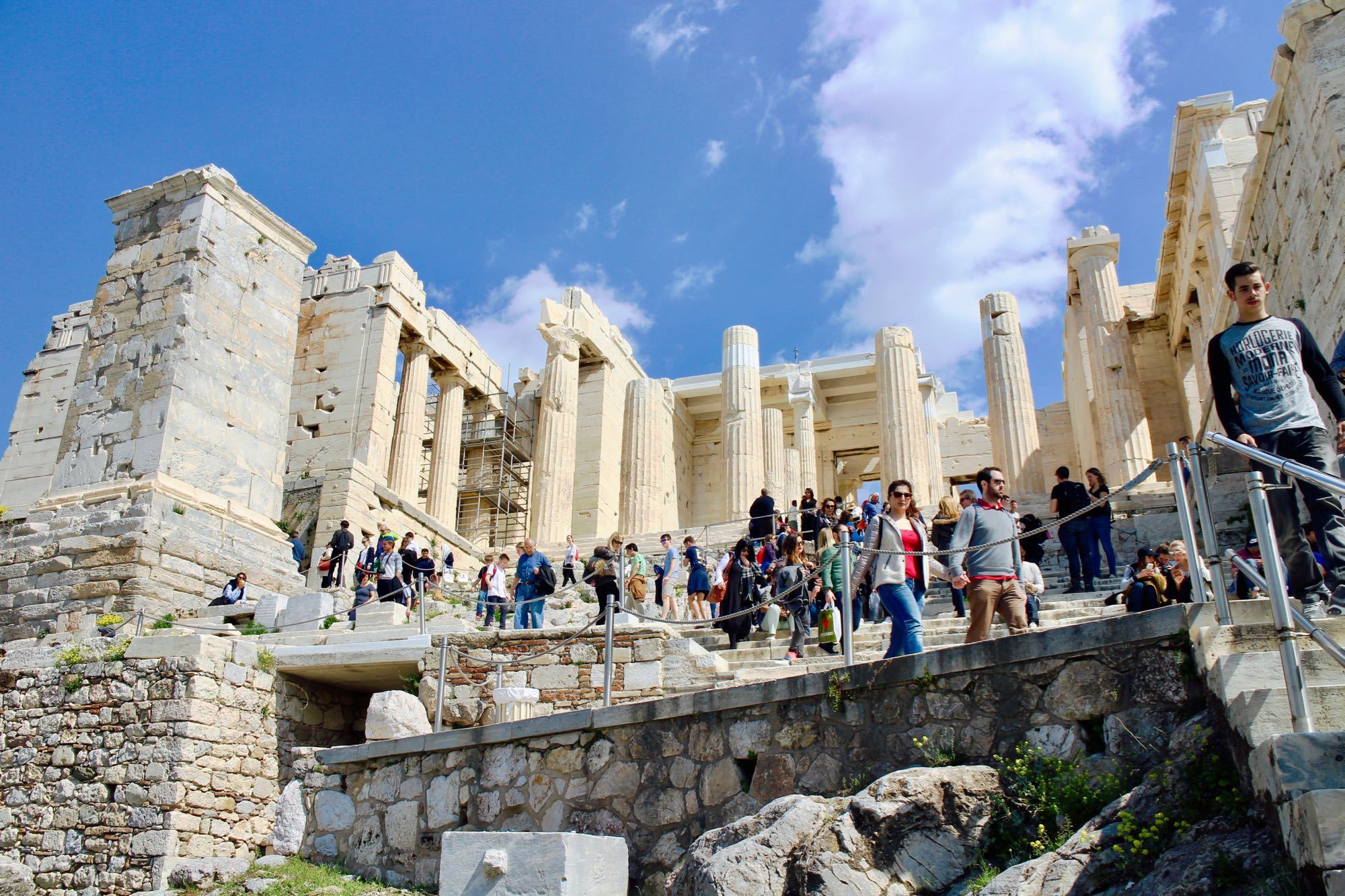
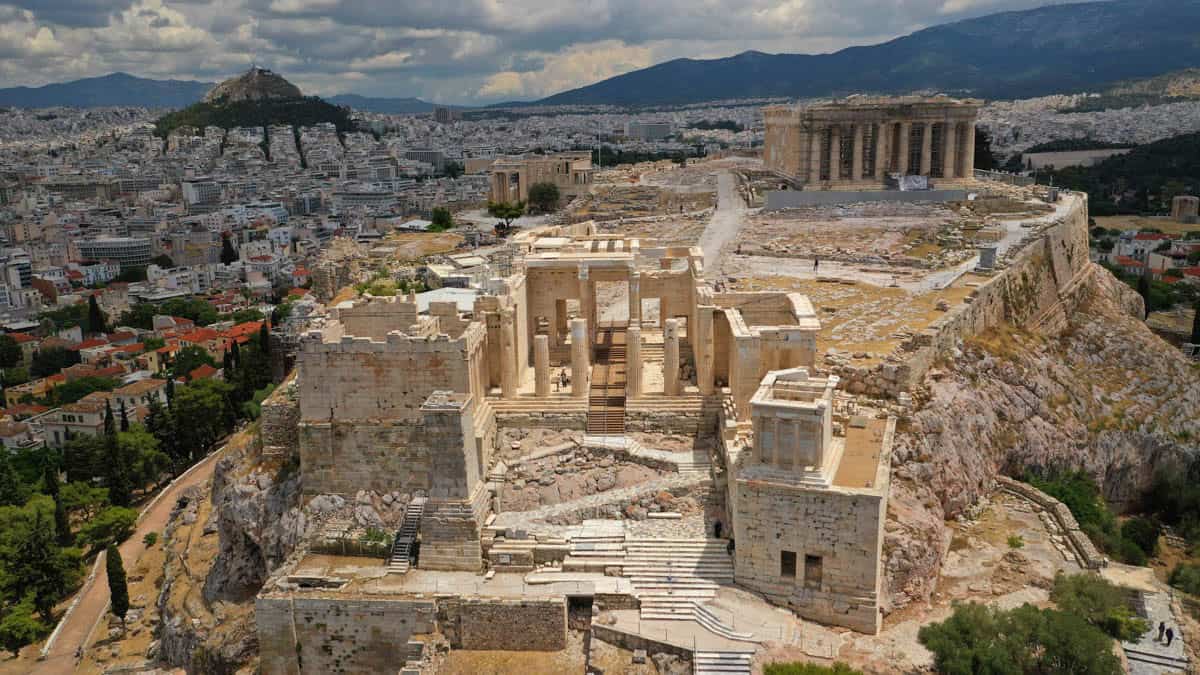
This monumental gateway serves as the grand entrance to the sacred Acropolis precinct and showcases impressive Doric and Ionic architectural styles.
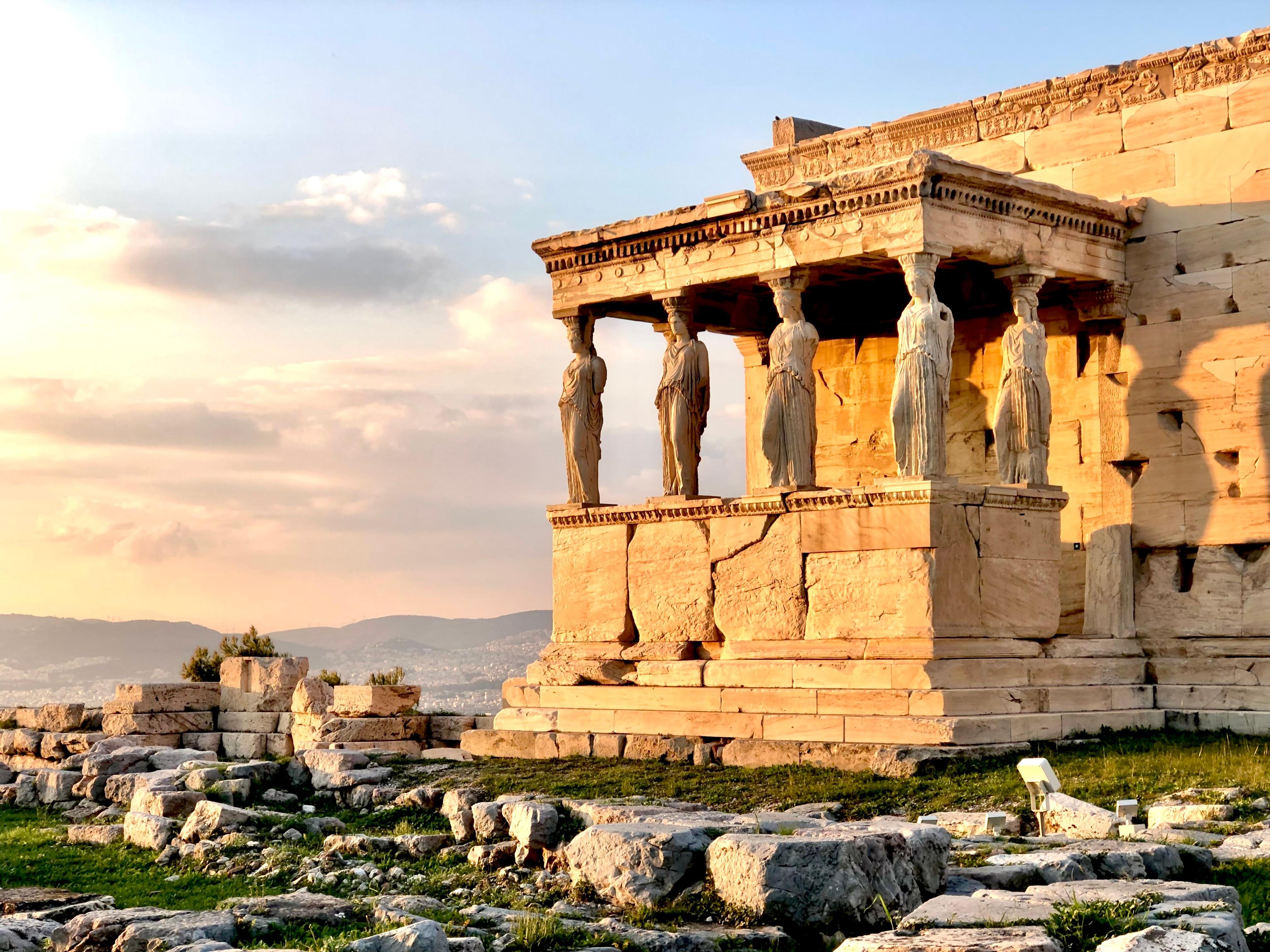
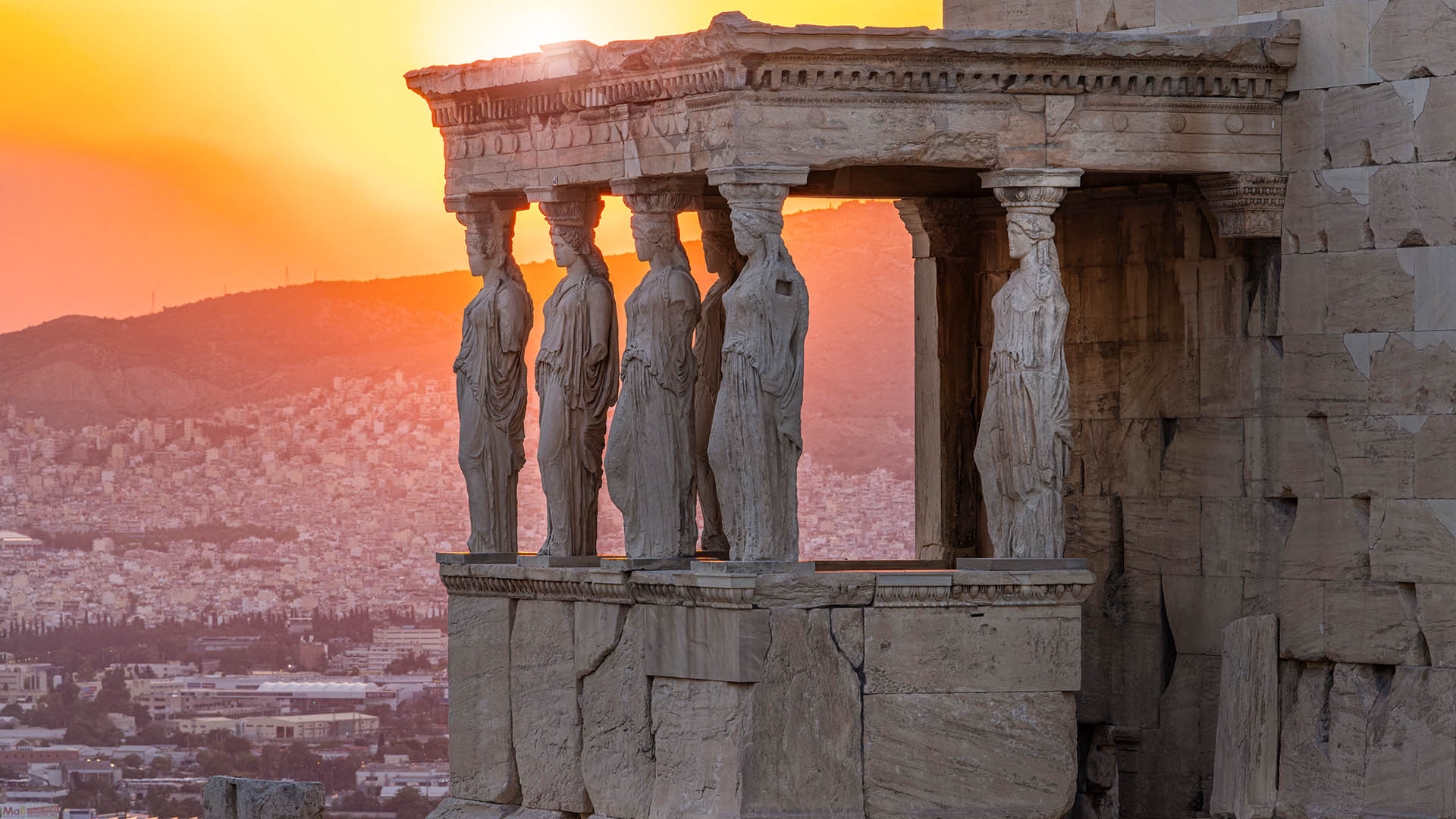
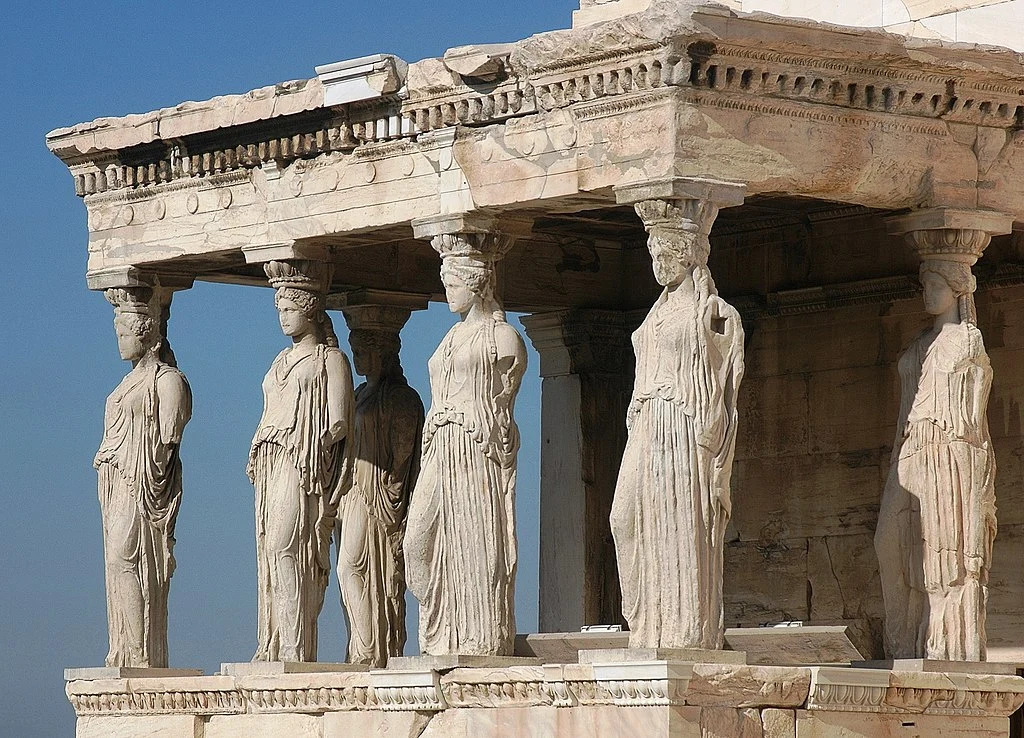
Known for its unique Porch of the Maidens, this temple was built between 421–406 BCE to honor multiple deities.
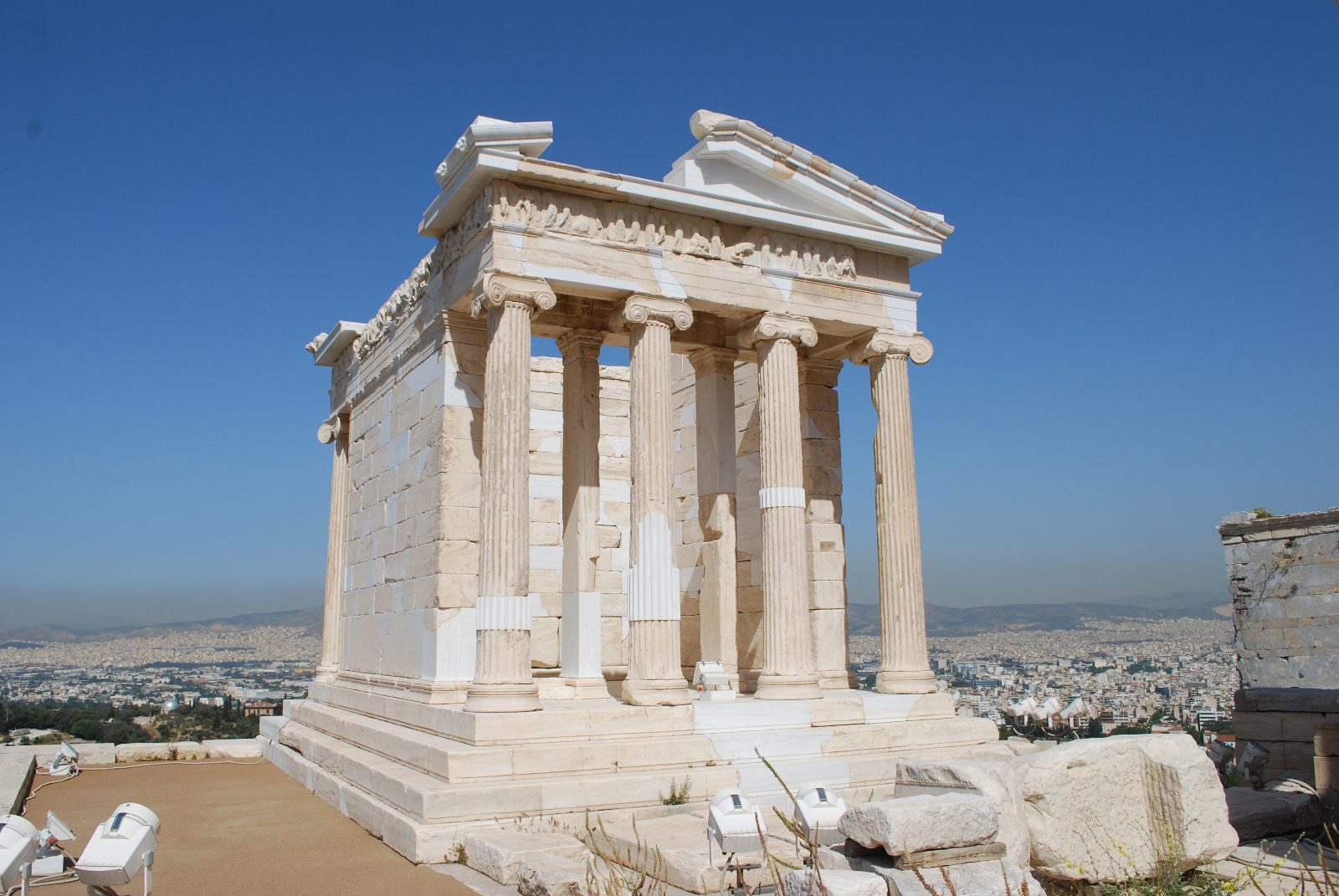
Constructed around 420 BCE to commemorate military victories, this delicate structure sits on a bastion overlooking the entrance.
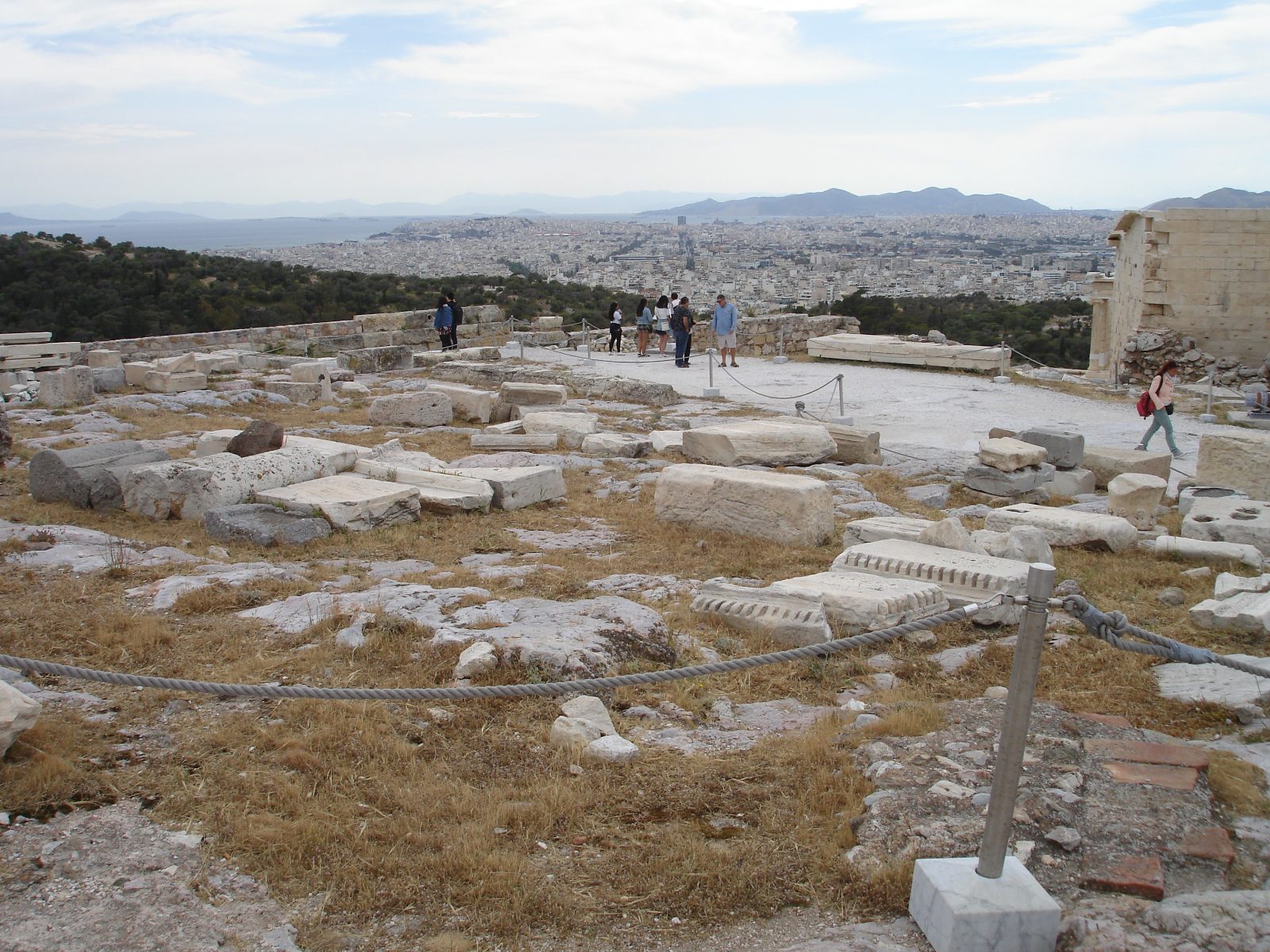
This sacred sanctuary dedicated to Artemis Brauronia was expanded under Pericles and occupies a significant space on the rock.
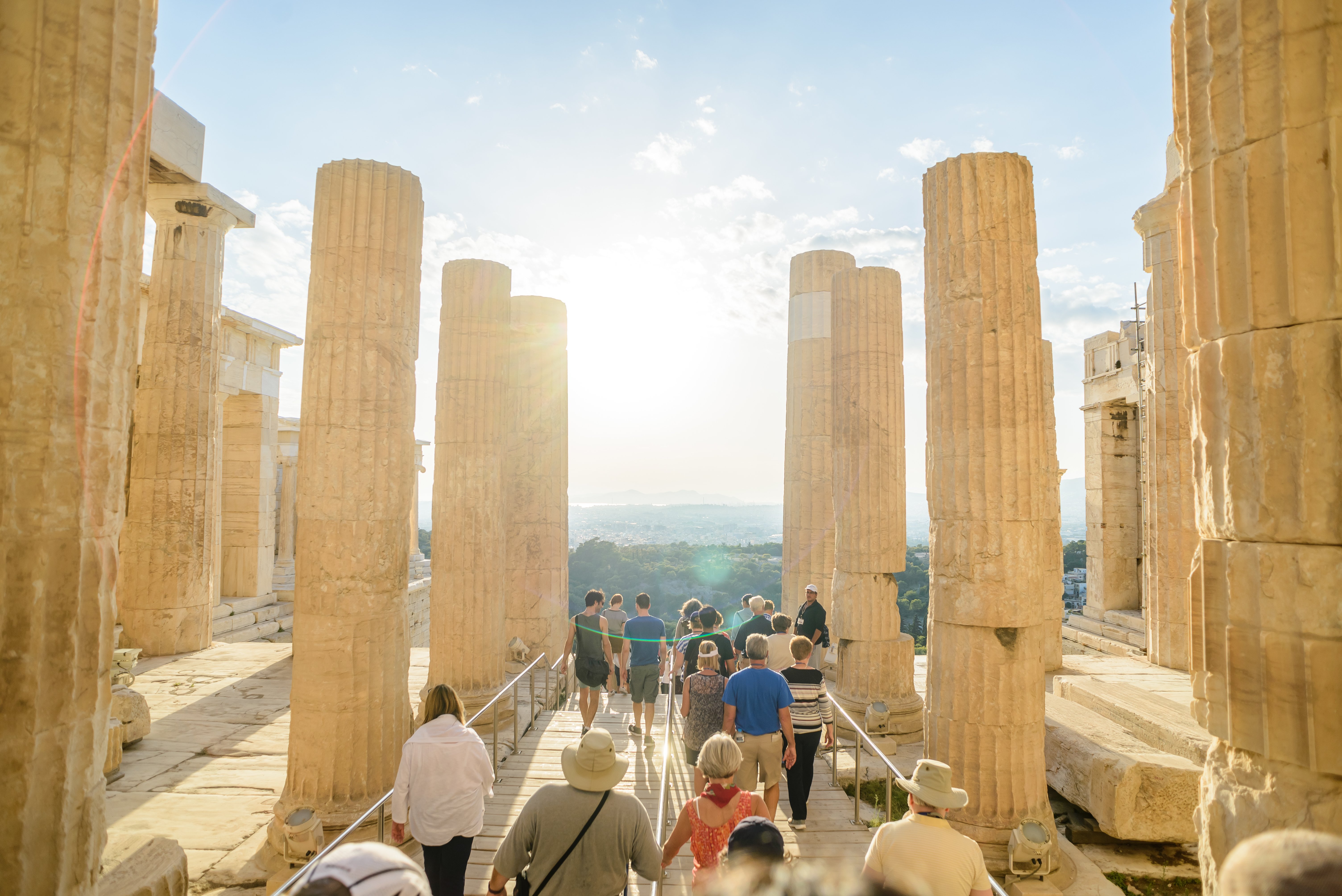
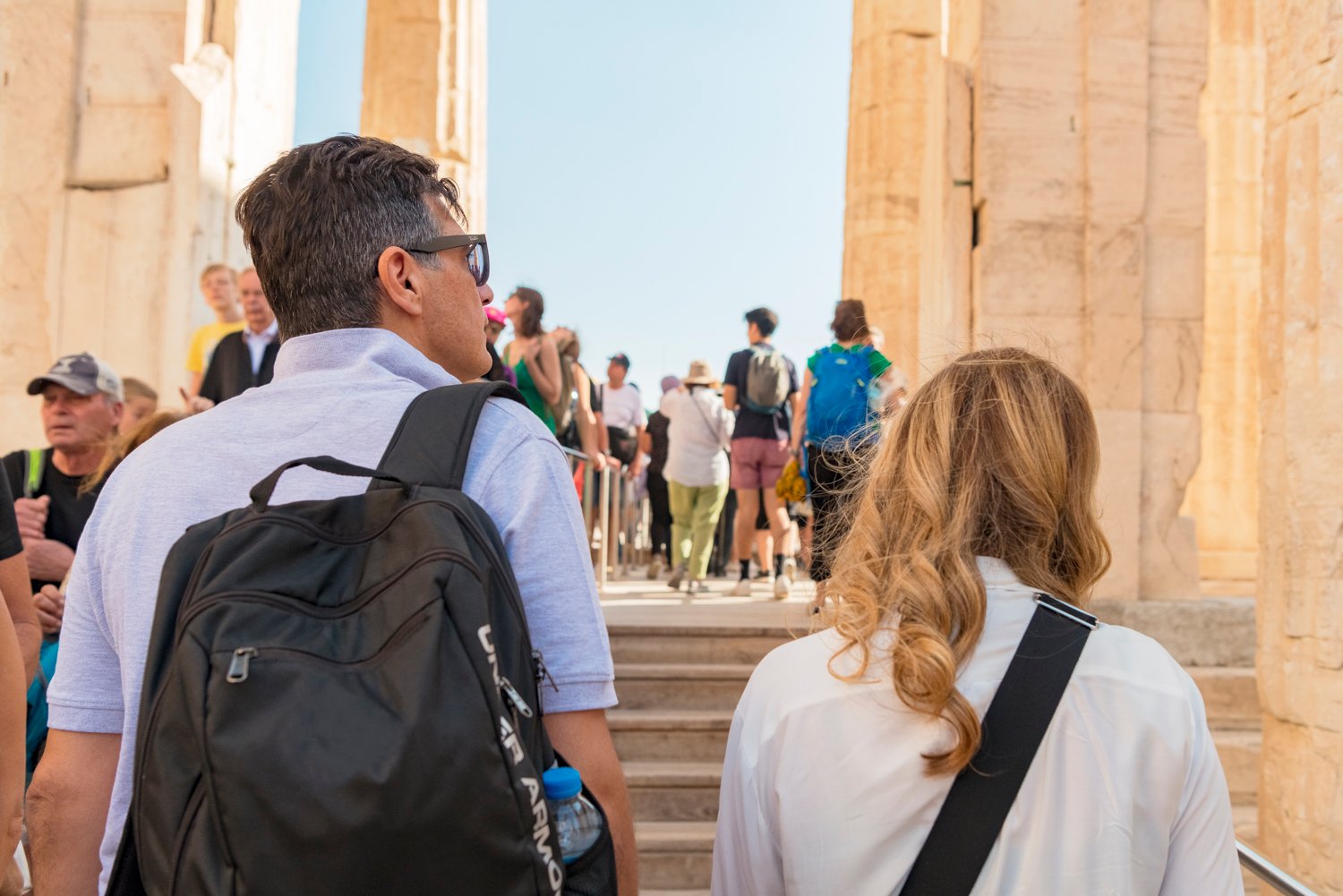
You arrive at the Propylaea, the monumental gateway that filters crowds into a single ascending file. The marble treads are worn smooth by 25 centuries of footfall.
As you pass through the central corridor, the Parthenon's western facade appears framed between columns — the architect Mnesicles calibrated this sightline deliberately.
Your guide pauses at the northwest corner, where you can see the entasis, the subtle convex curve built into each column shaft to prevent the optical illusion of concavity. The morning sun rakes across the fluting, casting 20 narrow shadows per drum. You walk the north peristyle, counting the eight columns of the shorter end, then the seventeen of the long side. The cella is open to the sky now; the roof burned in 267 CE during a Herulian raid.
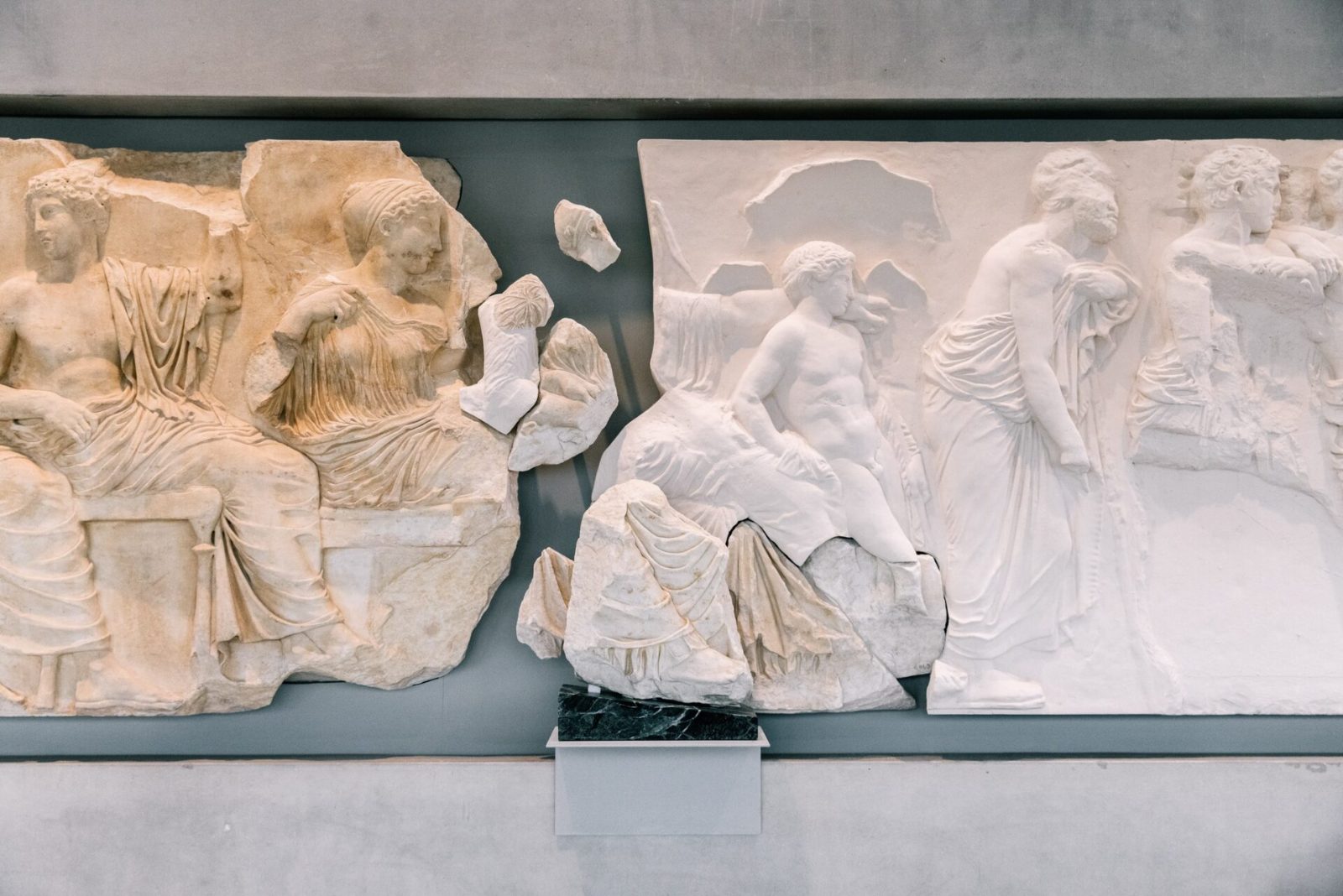
After circling the Erechtheion and its porch of maidens — five originals are in the museum, one in London, and the sixth is a concrete replica — you descend to the museum. The ground floor is transparent; excavated house foundations from the Roman and Byzantine periods lie visible beneath your feet. On the third floor, the Parthenon Gallery runs 300 metres in a continuous rectangular promenade. The frieze panels wrap around you at the height they occupied on the temple. You walk the north side first: horsemen adjusting their cloaks, marshals steadying rearing mounts, the Panathenaic procession frozen mid-stride in Pentelic stone.
All the details about your upcoming adventure in one place
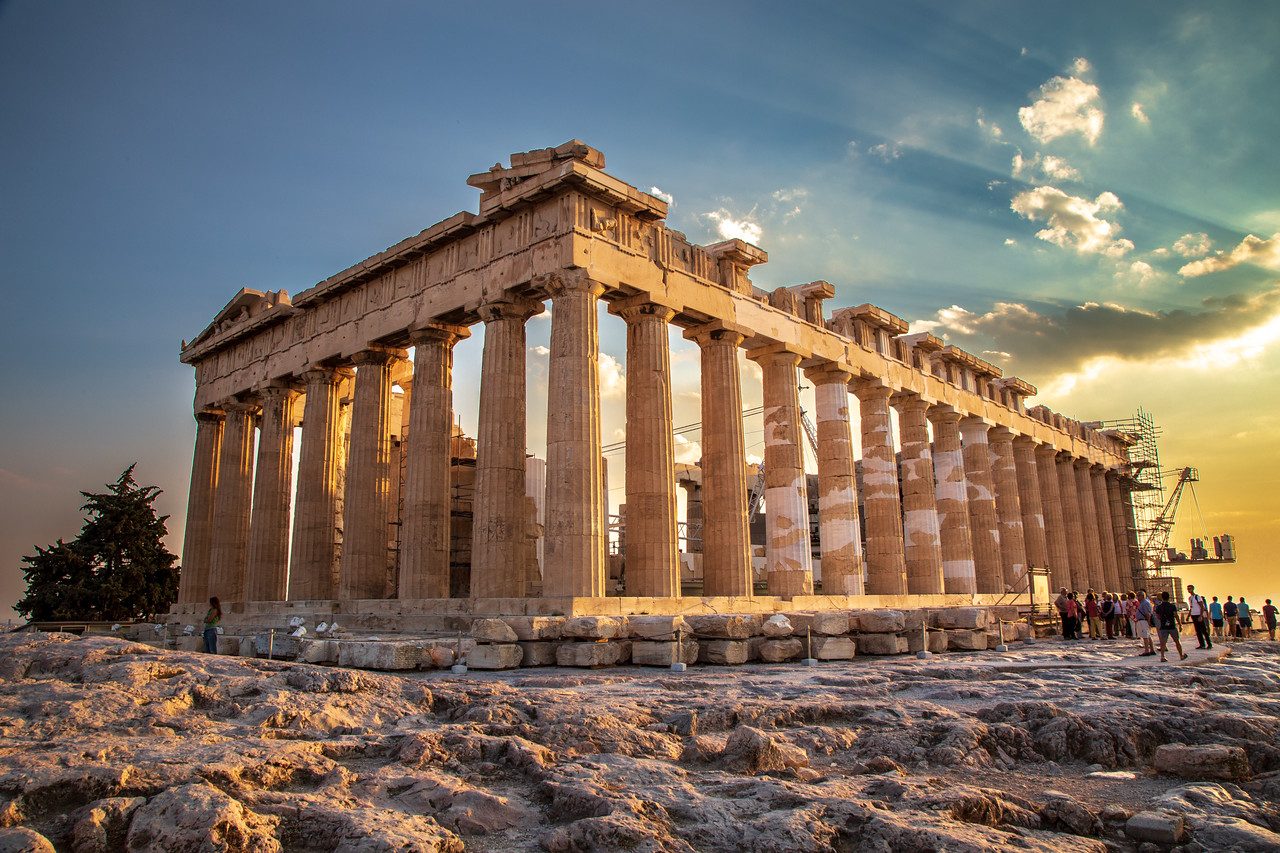
The Parthenon stands 156 metres above Athens on a limestone outcrop that has been continuously inhabited for 7,000 years. Construction began in 447 BCE under Pericles, and the temple was completed in just nine years — a pace that astonished even ancient chroniclers.
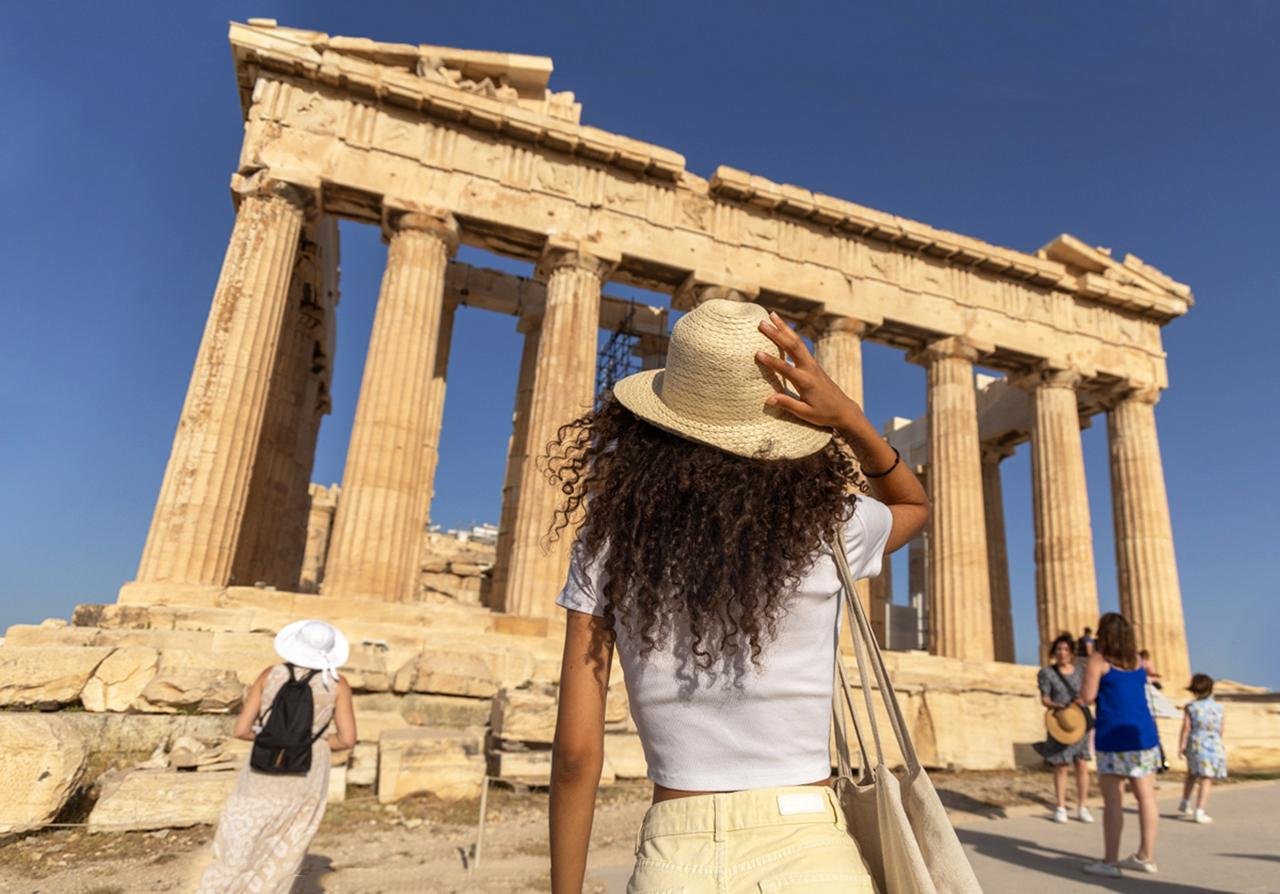
Its 46 outer columns lean inward by 60 millimetres, and the stylobate curves upward by 110 millimetres at the centre, optical refinements designed to counteract perspective distortion when viewed from below. Every vertical and horizontal line is subtly adjusted; no surface is truly flat or plumb. The cella once housed Phidias's 12-metre chryselephantine statue of Athena Parthenos, clad in 1,140 kilograms of gold.
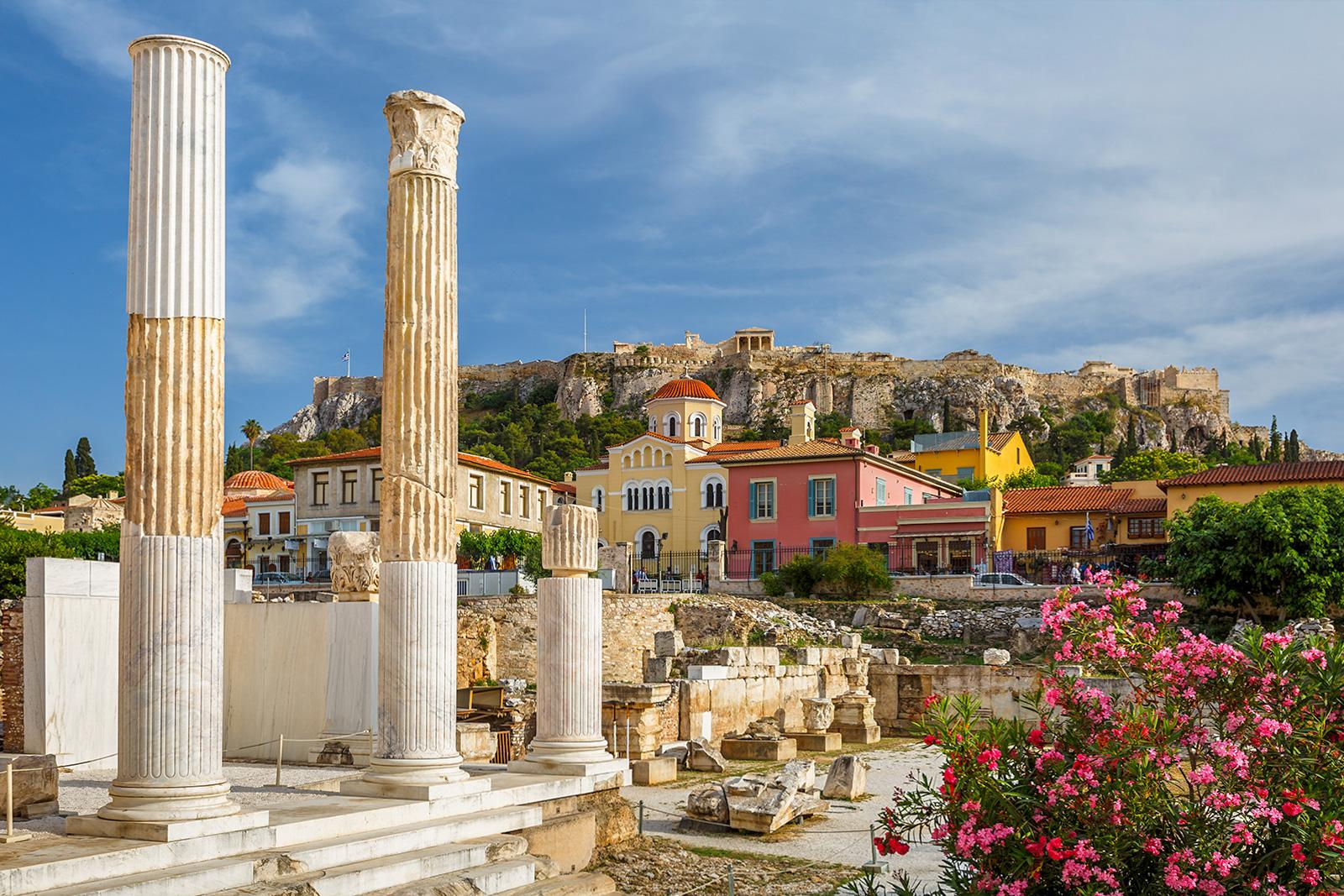
Today the Acropolis receives over three million visitors annually, making it Greece's most-visited archaeological monument. The site encompasses not only the Parthenon but the Erechtheion with its six Caryatid columns, the Temple of Athena Nike perched on a bastion overlooking the Propylaea gateway, and the Theatre of Dionysus on the southern slope where Greek tragedy was born. An athens acropolis & parthenon guided tour with museum connects these structures to the 14,000 artefacts displayed in the Acropolis Museum, including the original Caryatids preserved under climate-controlled glass and the 160-metre Parthenon Frieze reassembled in chronological sequence on the museum's top floor.
Pentelic marble, quarried 16 kilometres northeast of Athens, gives the monuments their honey-gold patina. The stone contains trace iron that oxidizes to a warm ochre under sunlight. Lord Elgin removed roughly half the surviving sculptural decoration between 1801 and 1812; those marbles remain in the British Museum, while the fragments that stayed in Athens anchor the museum's Parthenon Gallery. A full-scale concrete replica of the temple's footprint, oriented to match the hilltop original, allows visitors to see the frieze at eye level under natural light.
Restoration work has been continuous since 1975, guided by anastylosis principles: only original fragments are reincorporated, and every intervention is reversible. Titanium dowels have replaced the iron clamps installed in earlier campaigns, which corroded and cracked the marble. The Parthenon's western facade, long obscured by scaffolding, was unveiled in 2023. Conservators estimate another decade of work remains, focused on stabilizing the north colonnade and reassembling fallen architrave blocks stored in the site's workshops.

Every vertical and horizontal line is subtly adjusted; no surface is truly flat or plumb.
Visitors must wear appropriate clothing compatible with an archaeological site. High heels, stilettos, and sharp-soled footwear are strictly prohibited to protect the ancient marble surfaces of the athens acropolis & parthenon guided tour with museum site.
All visitors must pass through a security screening. While small backpacks are permitted, visitors to the athens acropolis & parthenon guided tour with museum are encouraged to limit carried items to facilitate efficient X-ray checks.
Handheld amateur photography is permitted throughout the Acropolis, provided it does not disrupt others. Professional equipment, including tripods and selfie sticks, is prohibited at the athens acropolis & parthenon guided tour with museum.
The athens acropolis & parthenon guided tour with museum is suitable for families, though parents should be aware of the uneven, marble-laden terrain. Strollers may be challenging to navigate; lightweight carriers are recommended.
The Acropolis features a modern, glass wheelchair-accessible elevator located near the North Slope entrance for visitors with mobility limitations. Persons with disabilities and one companion can access this service at the athens acropolis & parthenon guided tour with museum site after presenting official documentation.
Consumption of food and beverages is prohibited within the archaeological site. Visitors may carry personal water bottles to stay hydrated while enjoying their athens acropolis & parthenon guided tour with museum experience.
Opening Hours
08:00–19:00
Address
Athens 105 58, Greece
Accessibility
Elevator access and designated accessible routes available
Best arrival window
08:00–10:00
Security
X-ray scanners and security checkpoints enforced
Official site
https://tickets.hh.gr
Full tours canceled at least 24 hours in advance are eligible for a full refund. Entrance fees of 30 EUR for the archaeological site are non-refundable.
Recommended time
4-5 hours
A comprehensive athens acropolis & parthenon guided tour with museum typically spans 4 to 5 hours to allow for walking the slopes and exploring the galleries. We recommend booking athens acropolis & parthenon guided tour with museum tickets for the earliest possible entry to avoid peak heat and large cruise ship groups. Following the best arrival window of 08:00–10:00 ensures you can appreciate the marble architecture and UNESCO heritage sites before the midday congestion.
Crowd levels through the day
The Acropolis hill first saw fortification during the Mycenaean period, around 1200 BCE, when Bronze Age rulers built cyclopean walls that still underpin later structures. By the sixth century BCE, the tyrant Peisistratos commissioned the first monumental temple to Athena, but Persian forces destroyed it in 480 BCE during their sack of Athens. Themistocles incorporated the broken column drums and scorched marble blocks into the northern wall as a memorial to the invasion. This visible scar remained for three decades, a deliberate reminder of Persian aggression. Pericles launched the ambitious reconstruction in 447 BCE, entrusting architects Iktinos and Kallikrates with the Parthenon's design while sculptor Pheidias oversaw the decorative program. Workers quarried Pentelic marble from Mount Pentelikon, hauling each drum sixteen kilometers by ox-cart. The building's optical refinements—entasis in the columns, slight upward curvature of the stylobate—corrected perspective distortions that would make straight lines appear to sag. The chryselephantine statue of Athena Parthenos, standing twelve meters tall with gold plating and ivory flesh, dominated the interior cella until Byzantine authorities removed it in the fifth century CE. The athens acropolis & parthenon guided tour with museum allows visitors to trace these construction details through the original fragments displayed in the adjacent museum galleries. Christian conversion transformed the Parthenon into a church dedicated to the Virgin Mary by the sixth century, requiring the removal of interior columns and the addition of an apse. Ottoman forces converted it into a mosque in 1460, adding a minaret to the southwest corner. The catastrophic explosion of 1687 occurred when Venetian artillery ignited Turkish gunpowder stored inside, destroying the roof and central colonnade. Lord Elgin's removal of the western pediment sculptures and much of the frieze between 1801 and 1812 stripped half the decorative program, now housed in the British Museum. Modern restoration began in 1975 under architect Manolis Korres, using titanium dowels and anastylosis techniques to reassemble dispersed fragments. The athens acropolis & parthenon guided tour with museum tours now incorporate the conservation workshops where teams still reconstruct damaged metopes using laser scanning and 3D modeling. The Acropolis Museum, opened in 2009, displays the original Caryatids from the Erechtheion and the surviving Parthenon frieze sections in their correct architectural sequence.
Mycenaean rulers fortified the Acropolis hill with cyclopean limestone walls that remain visible beneath later construction.
Persian forces burned the archaic temple of Athena, and Athenians built scorched marble fragments into the northern fortification wall.
Pericles commissioned architects Iktinos and Kallikrates to build the Parthenon, completed in fifteen years using Pentelic marble.
Byzantine authorities converted the Parthenon into a Christian church, removing interior columns and adding an eastern apse.
Venetian artillery struck Ottoman gunpowder stored in the Parthenon, destroying the roof and sixteen columns in a massive explosion.
Lord Elgin removed half the surviving sculptures, shipping 247 feet of frieze and seventeen pediment figures to London.
Manolis Korres initiated systematic restoration using titanium clamps and anastylosis to reassemble fragmented marble blocks.
The Acropolis Museum opened at the southern base, displaying original Caryatids and frieze sections with views of the monument above.
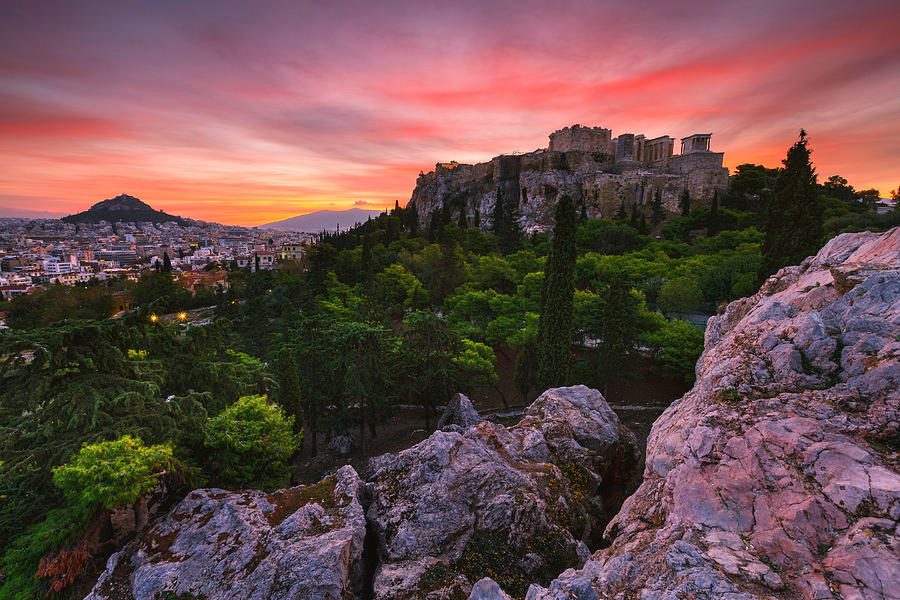
Climb the stone steps of this rocky outcrop to capture a panoramic perspective of the Propylaea and the sheer scale of the citadel. It offers a clear view of the western approach and is a popular spot for those on an athens acropolis & parthenon guided tour with museum.
Walk along the northern edge of the plateau to frame the columns against the sky without the crowds found at the main entrance. This angle highlights the ancient architecture and the UNESCO heritage site details.
Position yourself to capture the Caryatids from the lower terrace level to avoid silhouetting against the direct sun. This perspective provides a focused look at the ornate sculptural elements favored by guests on an athens acropolis & parthenon guided tour with museum tours.
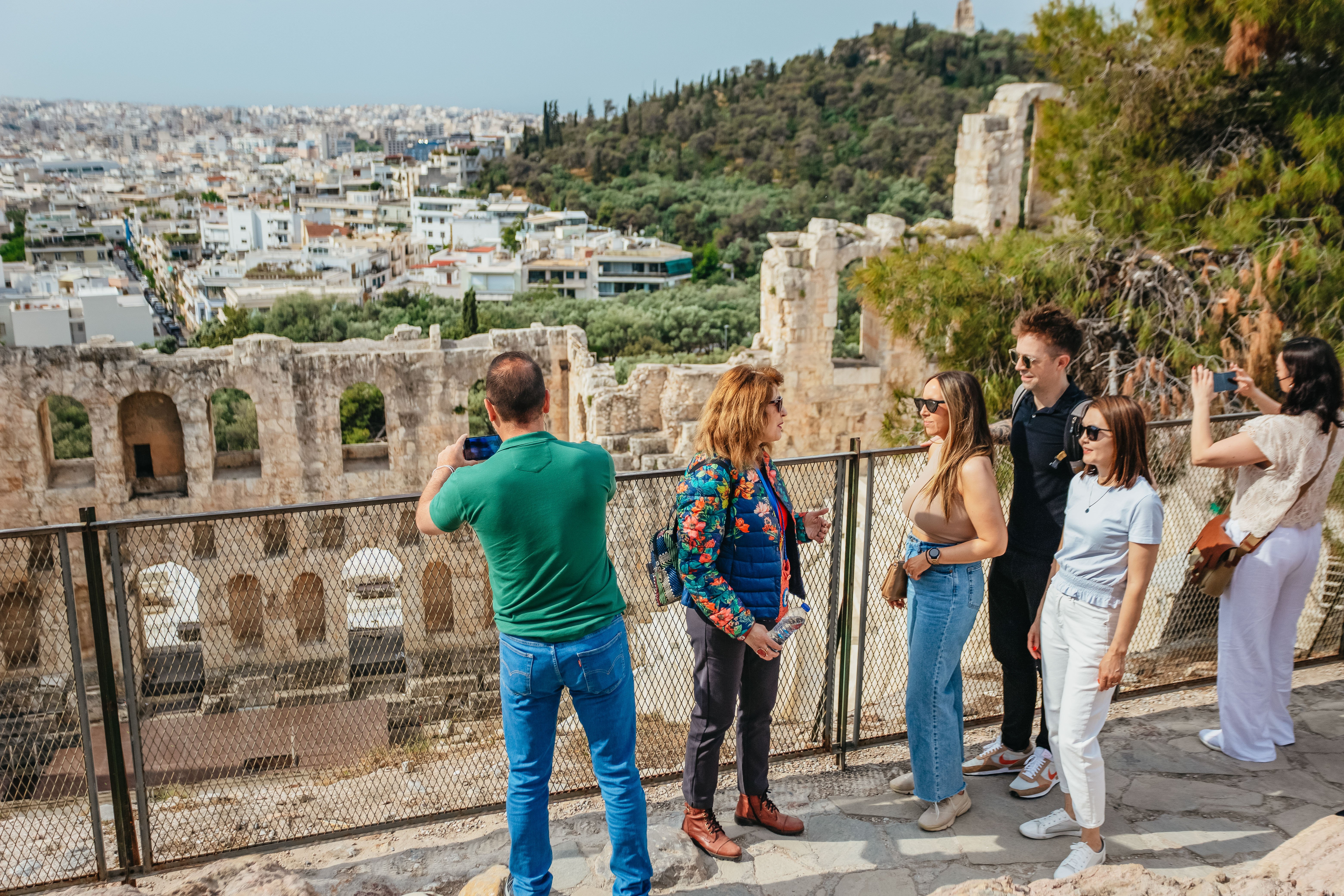
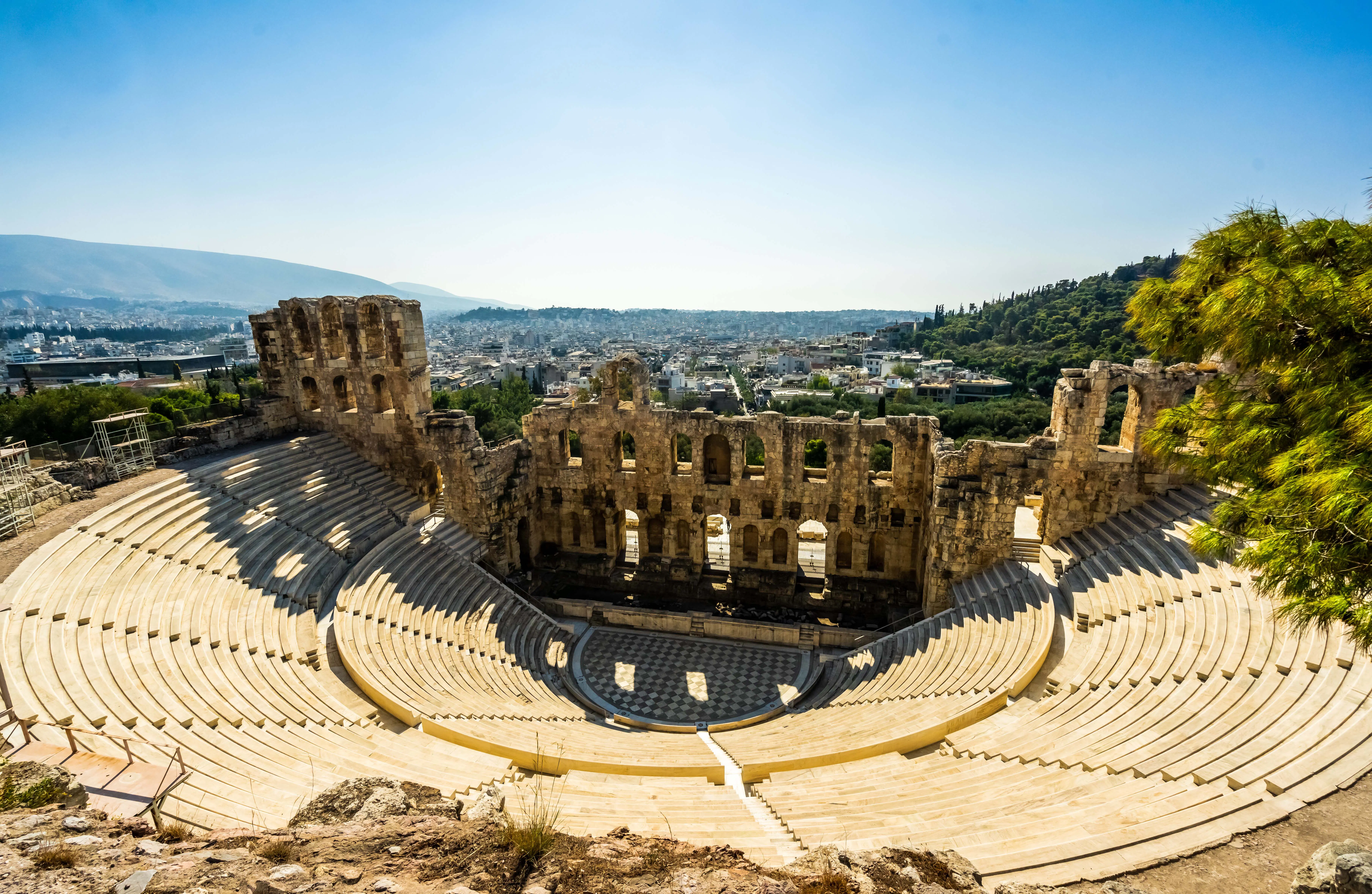
From the southern slope path, look up to frame the ancient stone tiers against the marble foundations of the temples above. This vantage point helps illustrate the scale of the sanctuary for an athens acropolis & parthenon guided tour with museum tour.
Exploring the citadel with children is a rewarding experience when you focus on the stories behind the ruins rather than just the history. An athens acropolis & parthenon guided tour with museum is the best way to keep young minds engaged while navigating the site's unique terrain.
Baby strollers are not allowed inside the archaeological site, so a baby carrier is essential for the climb. The museum offers free stroller loans at the cloakroom, making the indoor galleries much easier to navigate with little ones.
The site involves uneven, slippery marble paths and limited shade, so aim for a 1.5 to 2-hour visit. An early arrival between 08:00–10:00 is vital to beat the heat and the heaviest cruise ship crowds.
The Acropolis Museum provides excellent resources, including a parents' room on the first floor for changing and feeding. You will also find family activity backpacks and trails designed to keep children curious throughout your athens acropolis & parthenon guided tour with museum tour.
Keep a close watch on children, as the summit features steep, unfenced drops and slippery, ancient stones. Sturdy, closed-toe shoes are recommended for everyone to safely manage the climb to the Parthenon and surrounding structures.
To make your athens acropolis & parthenon guided tour with museum tours more successful, introduce Greek mythology before your trip to help kids connect with the landmarks. Encourage them to spot architectural details like the columns' slight curves to bring these famous city landmarks to life.
Dining options near your athens acropolis & parthenon guided tour with museum are concentrated in the pedestrian streets of Makriyianni and Koukaki. While there are no restaurants inside the archaeological site, the surrounding neighborhoods provide classic Greek tavernas perfect for post-visit meals.
Located inside the museum, this venue offers views of the Parthenon from its terrace. It is ideal for lunch after your athens acropolis & parthenon guided tour with museum tours.
Everything you need to know for your journey
The Acropolis is open daily from 08:00–19:00. The best arrival window to avoid crowds is 08:00–10:00.
Yes, a wheelchair-accessible elevator is available at the north side for those with limited mobility. Visitors should present documentation at the athens acropolis & parthenon guided tour with museum entrance.
Small bags are permitted but subject to security screening. Avoid bringing large luggage to the athens acropolis & parthenon guided tour with museum.
Yes, handheld amateur photography is allowed. Professional gear, including tripods, is prohibited during your athens acropolis & parthenon guided tour with museum.
It is best to arrive between 08:00–10:00 to avoid mid-day heat and large groups. This is a common recommendation for any athens acropolis & parthenon guided tour with museum visit.
Footwear that could damage marble, such as high heels, is strictly prohibited. Wear comfortable, flat shoes for your athens acropolis & parthenon guided tour with museum.
Food and drinks are not allowed inside the archaeological site. Keep water bottles with you during your athens acropolis & parthenon guided tour with museum visit.
Yes, families are welcome. However, consider the terrain and climate when planning your athens acropolis & parthenon guided tour with museum.
Booked tours are subject to specific operator policies, usually requiring 24-hour notice for refunds. The 30 EUR entrance fee is standard for athens acropolis & parthenon guided tour with museum visits.
The site includes the Parthenon, Propylaea, Erechtheion, and the Temple of Athena Nike as part of your athens acropolis & parthenon guided tour with museum.
Join thousands of happy travelers who have discovered this incredible experience
Book Your Experience Now